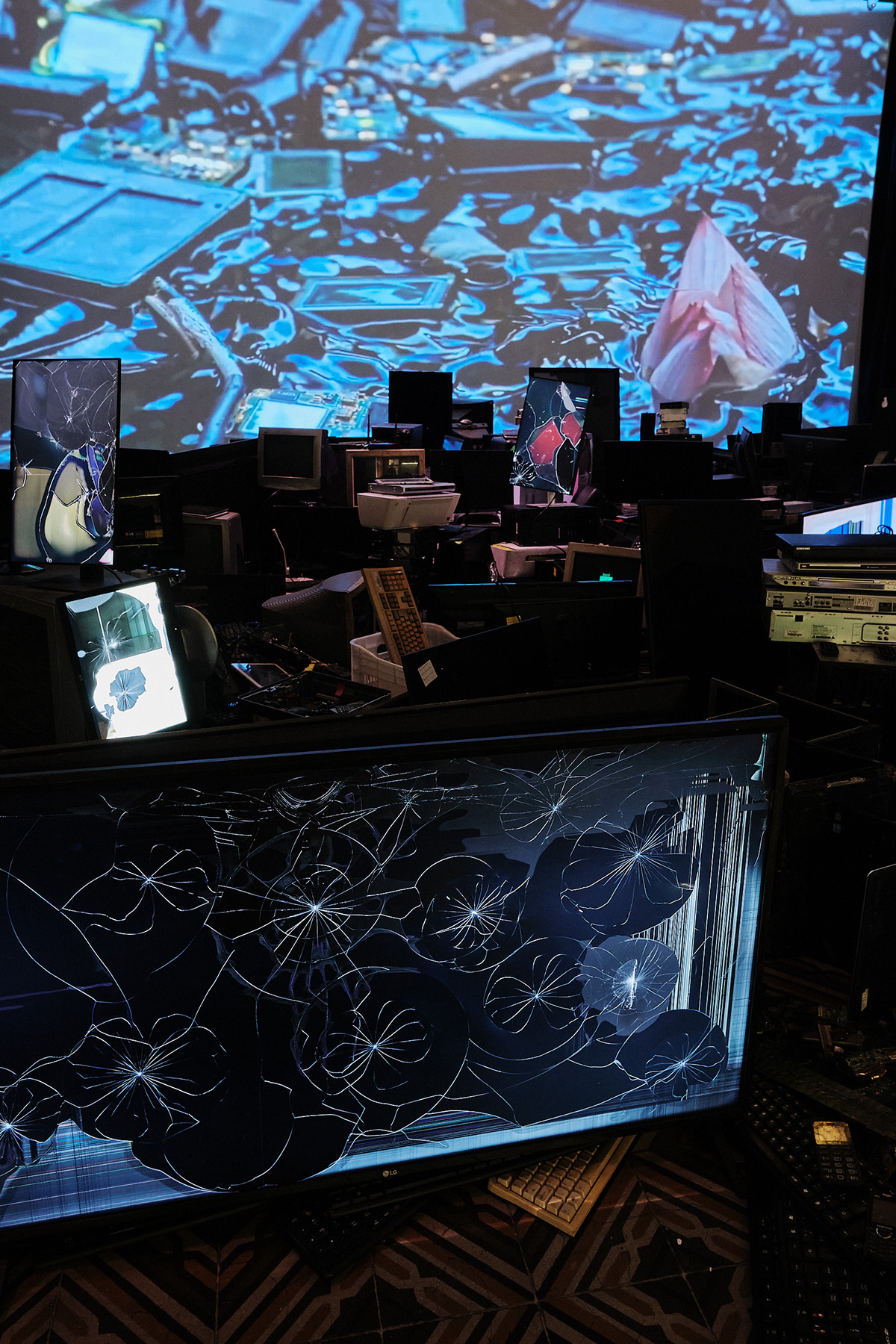
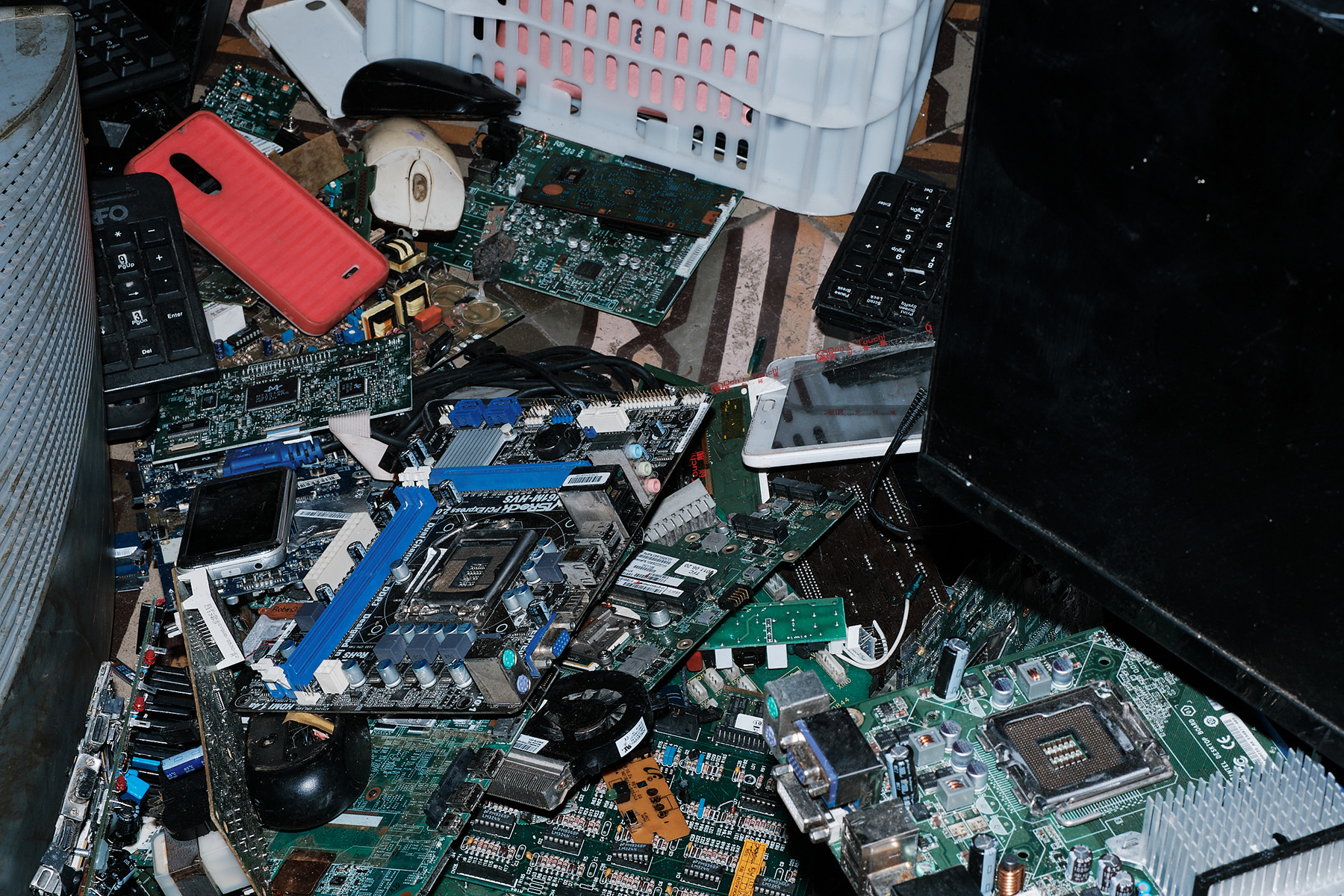
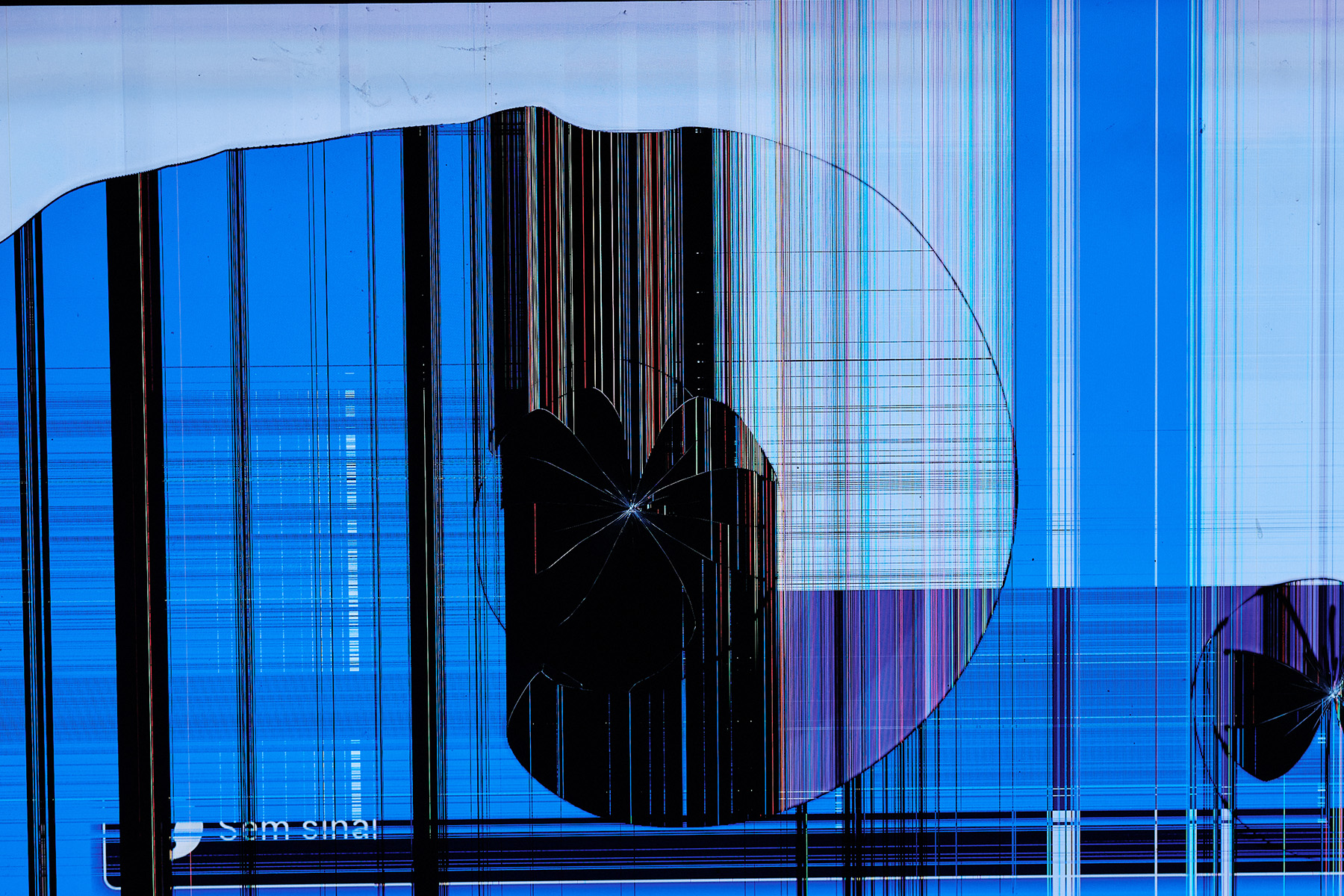
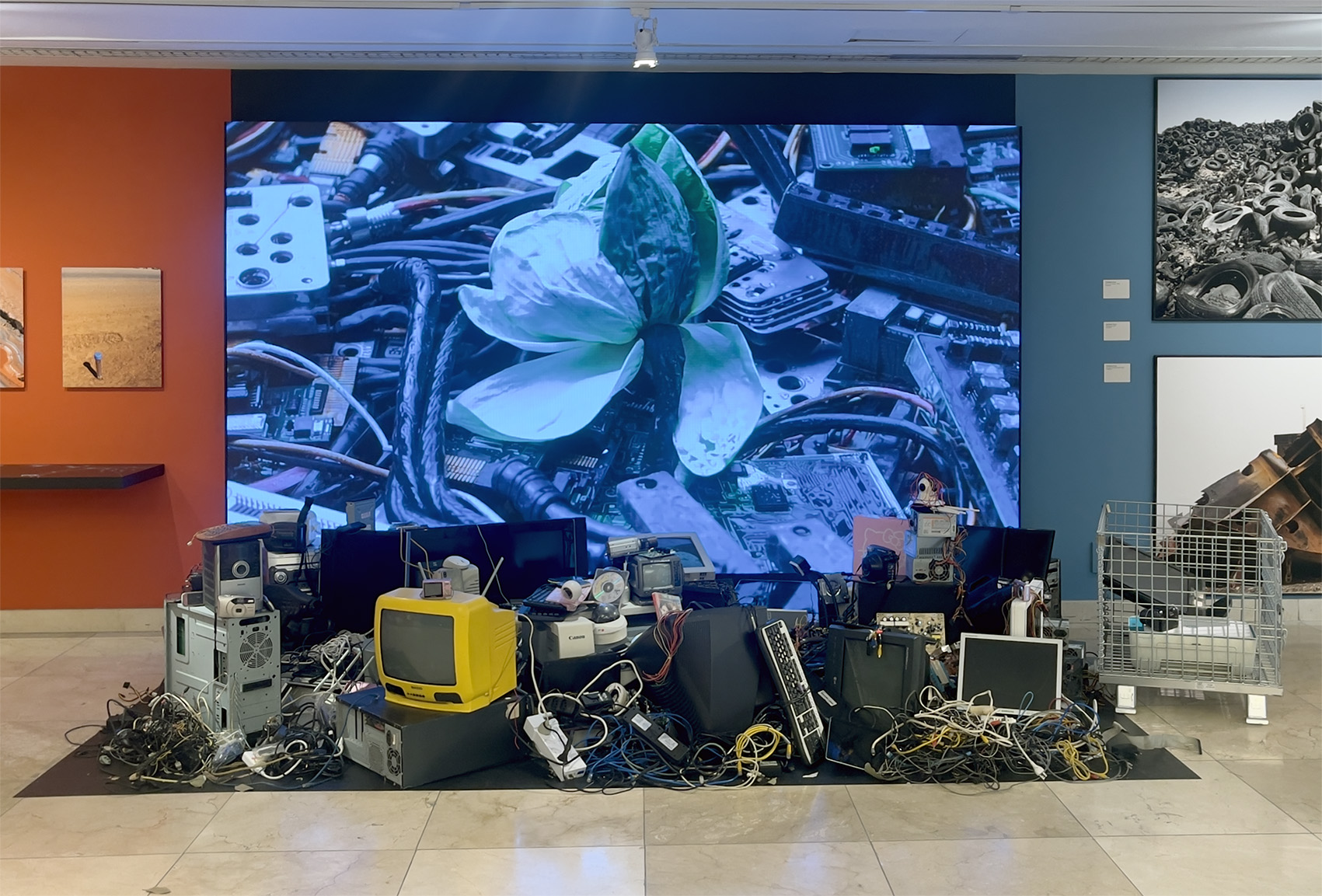
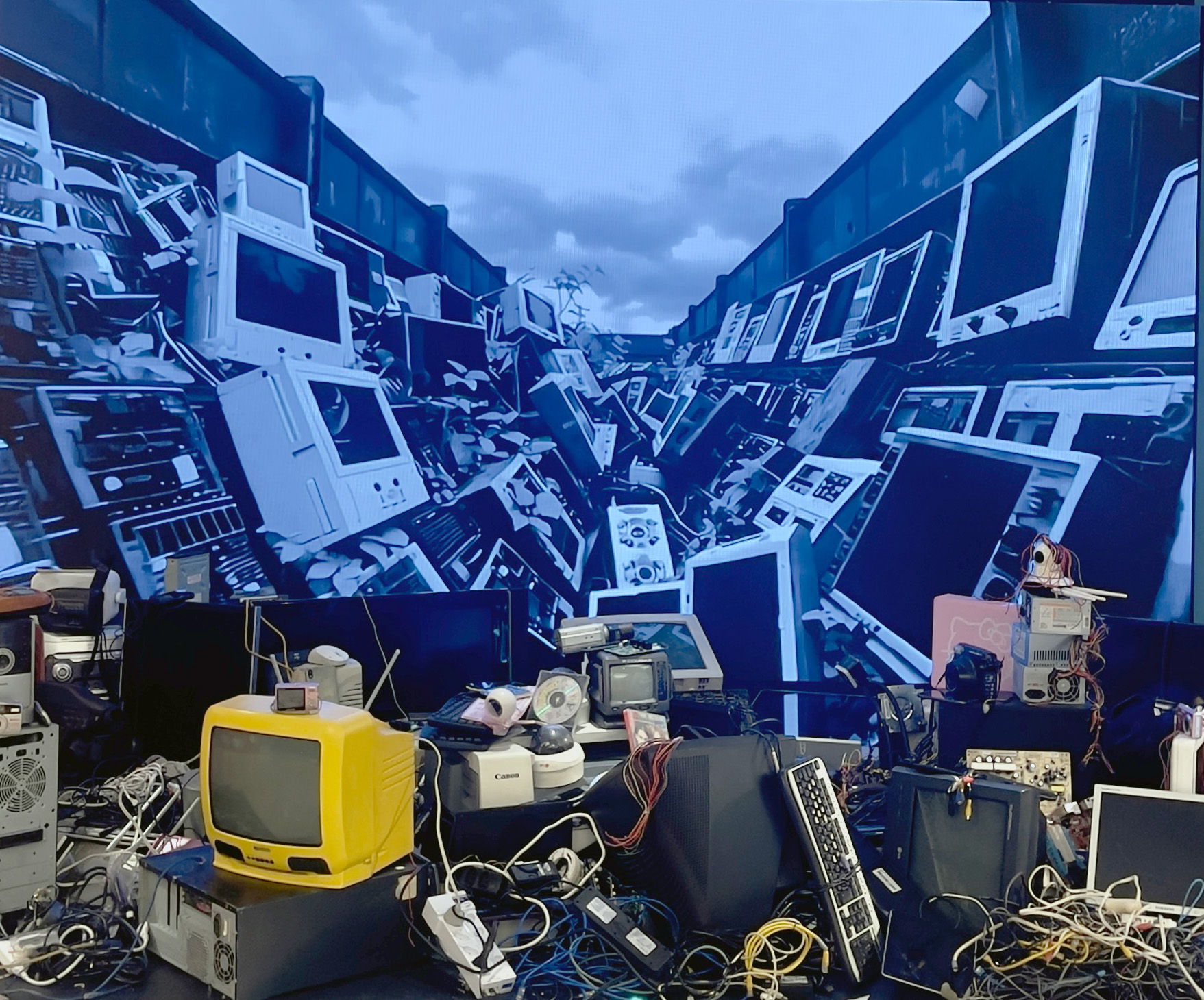
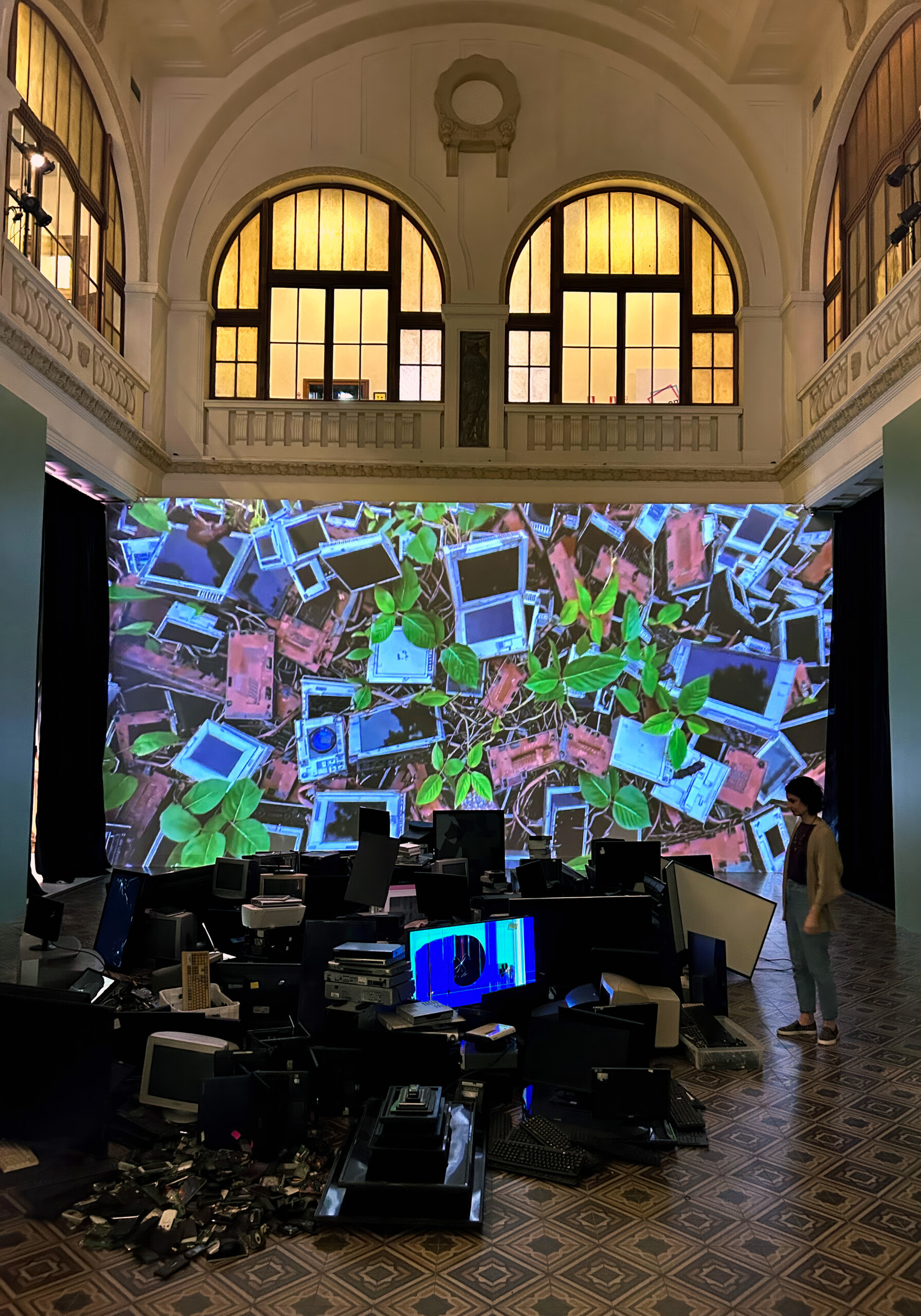
Beleza Corrosiva is a participatory video installation that addresses the environmental impact of digital technologies. It combines a video entirely created with AI (Sora), developed within the context of the OpenAI Artist Program, with an electronic waste donation station. Together, the video images—depicting a dystopian future in which rivers are overtaken by electronic waste—and the growing piles of discarded devices produce a highly mobilizing effect. At the end of each exhibition all materials are donated to electronic waste recycling cooperatives. Beleza Corrosiva (2025) by Giselle Beiguelman was commissioned to Movimentos Miméticos at CCBB – São Paulo and presented at Museu de Arte do Rio Grande do Sul (Sep. 13-Nov.30). It is on view in Rio de Janeiro and Campinas (FGV-RJ and Sesc Campinas-SP until June 2026).
Concept
Corrosive Beauty questions the environmental impacts of digital technologies through dystopian images of a likely future in which rivers are overtaken by dysfunctional equipment of all kinds. In the projection, which depicts an imaginary Amazon River, landscapes marked by the contrast between the organic and the technological evoke a state of corrosive beauty — a direct allusion to André Breton’s surrealist concept/verse of convulsive beauty, but in reverse.
Corrosive Beauty departs from the famous photomontage by André Breton, published in Minotaure magazine no. 10 (1937, P. 21), showing a locomotive being devoured by nature. The image illustrated a text by Benjamin Péret, suggestively titled “La Nature Dévore le Progrès et le Dépasse” (Nature Devours Progress and Surpasses It), and brings to the forefront the explosive-fixed beauty Breton evokes in his poem Nadja, confronting the tension between movement and stillness and suggesting nature’s life drive in contrast to the decrepitude of metallic ruin.
This dynamic, however, is not confirmed in the images of Corrosive Beauty, where roots intertwine with cables and a flower sprouts from motherboards — but fails to bloom. Created entirely with artificial intelligence (Sora), the video captures the devastation and attempts at resilience of an ecosystem in flux, striving to defy the logic of destruction, trying to survive — but failing.
Technical information
The installation features:
🔸 Large-scale projection of AI-generated imagery
🔸 An e-waste collection station within the exhibition space
🔸 A partnership with cooperatives that collect and recycle the electronic waste
The e-waste donated by visitors is physically incorporated into the installation, forming a living — or dying — body that pulses between obsolescence and transformation. At the end of the exhibition, all collected material is sent for recycling, completing a symbolic cycle of exposure and decomposition.