Good exhibitions need to be seen and revisited. Such is the case with Taswir: a fotografia árabe contemporânea, which I visited on its final day. Unfortunately, most exhibitions run only briefly in São Paulo, making their documentation a precious resource for seeing — or revisiting — the material shown.
Taswir, which is no longer on view, was accompanied by a catalogue, available for purchase at Instituto Tomie Ohtake, that offers a good sense of the exhibition.
The exhibition brought together 14 photographers from different parts of Africa, the Arabian Gulf and the Middle East. It presented images that put us in contact with landscapes, territories and attitudes at once very different from what we are accustomed to seeing and concerned with issues common to the contemporary world, such as feminism and mining’s impact on communities.
This exhibition particularly caught my attention because it broke with the stereotypes conventionally associated with the Arab world, so centered on religious experience and wars, approaching everyday life in this region so marked by armed conflict in a distinctive way.
Jaber Al Azmeh and Roger Grasas
In this regard, I highlight the series “Borders” by Syrian photographer Jaber Al Azmeh. In his images, set in sunlit desert landscapes, emptiness and the pain of migration prevail, alongside the strength of the struggle for survival.
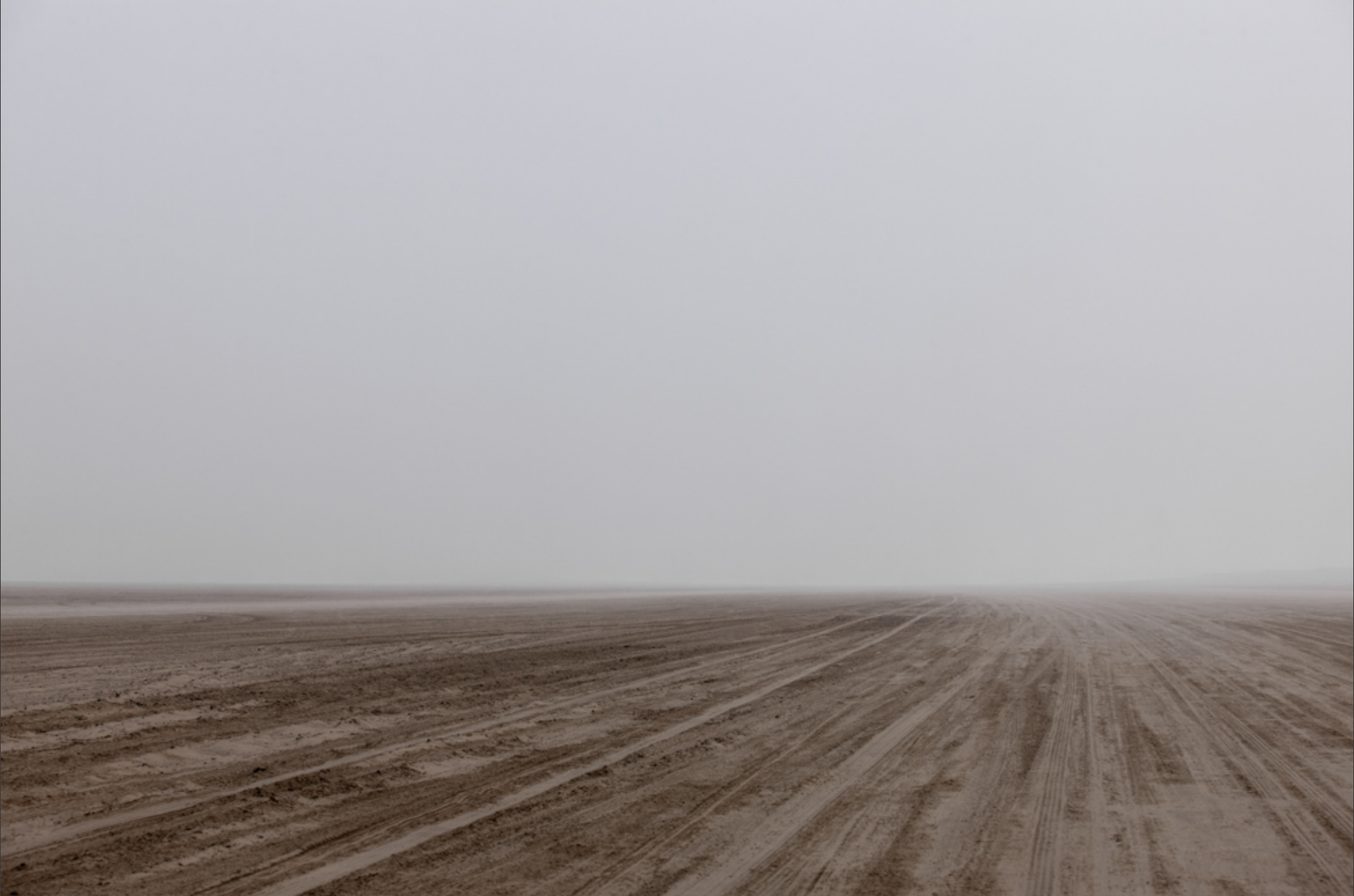
Among themes shared across the globalized world, the photographs of Roger Grasas stand out. A Catalan artist who lives between Barcelona and Riyadh, he has an excellent website featuring his work. He records the changes in ways of life brought by globalization and new technologies to cities in countries such as Saudi Arabia, Qatar and the United Arab Emirates.

These are utterly surprising photographs, like the featured image of this post, with unusual angles focusing above all on the urbanization of desert landscapes. He adopts, as he says, a viewpoint of estrangement, revealing a setting where traces of Islam’s traditional heritage combine with the postmodern spaces of the digital world.
Access the playlist with all audio recordings of the Ouvir Imagens column broadcast on Rádio USP since March 2018 | Read all transcripts and posts.
This column has a playlist on YouTube. Visit and share it.