







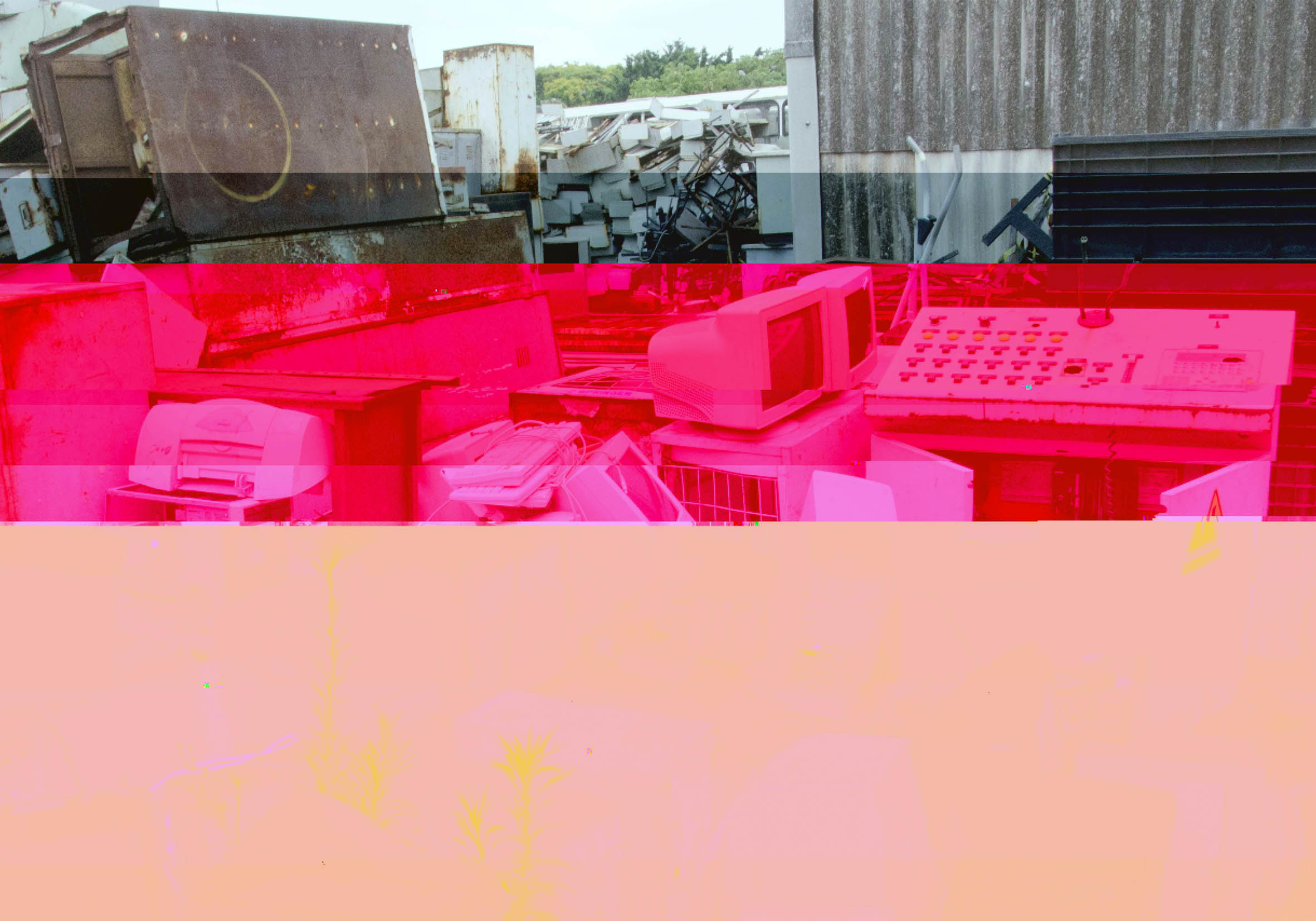

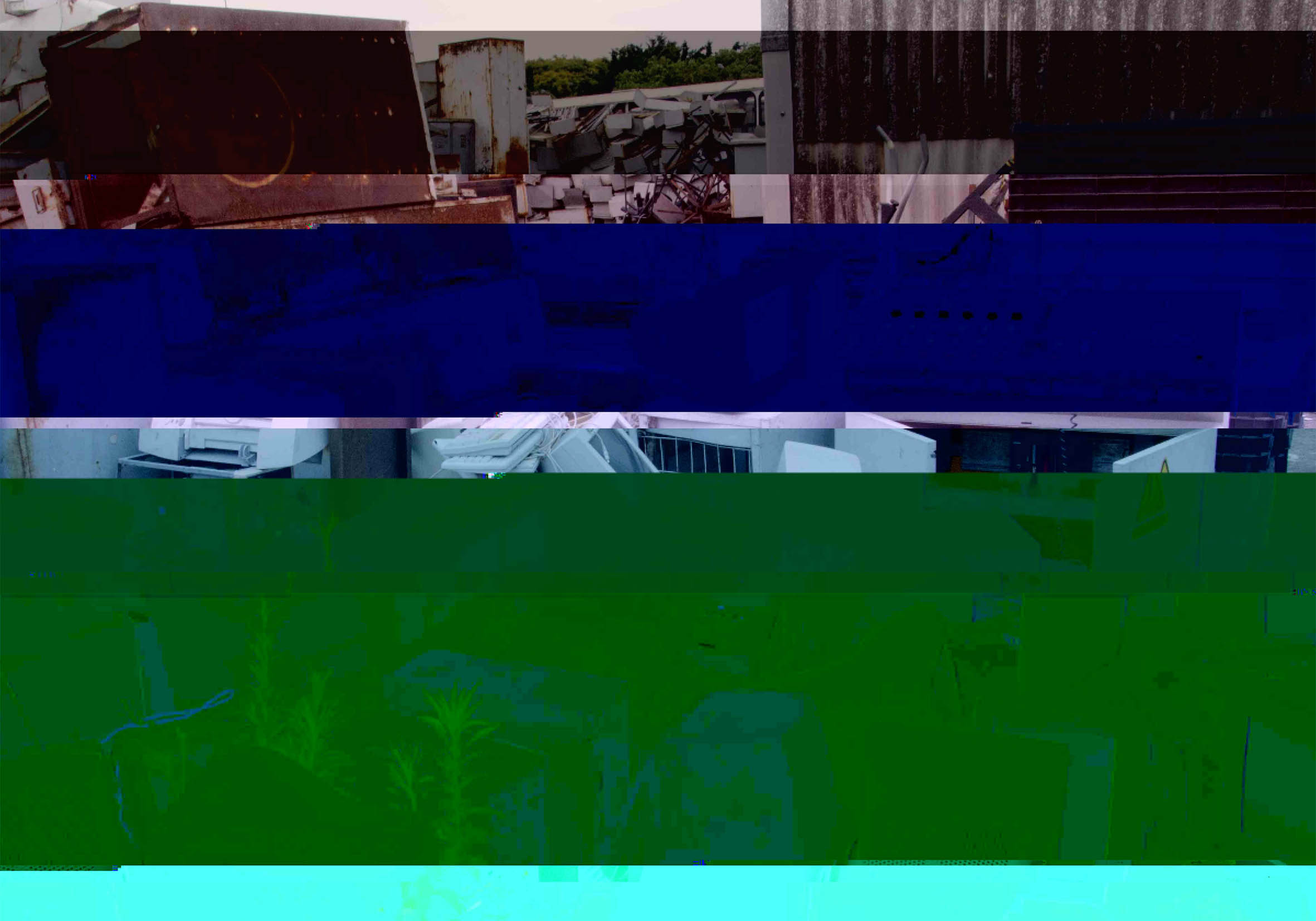


This previously unseen series references the film of the same name by Michelangelo Antonioni, one of Giselle Beiguelman’s main aesthetic influences. Taken at a municipal storage facility in São Paulo with a Nikon D7000 camera, the original photograph underwent various interventions when the artist submitted it to a video-corruption program for low-resolution images.
The incompatibility between the software’s parameters, designed for videos up to 800 × 600 pixels at 72 dpi [dots per inch], and the photograph’s 4928 × 3265 pixels at 300 dpi caused processing errors captured from the computer screen, interspersed with repeated operating-system crashes. The series portrays a scene that is a metaphor for the media landscape of the twenty-first century: state-of-the-art technologies turned into rubbish within a few years and piled up outdoors. It questions the disposability of digital equipment and its relationship with the inability to communicate, a central theme in Antonioni’s poetics.
12 images + 1 source image, 60 × 42 cm, inkjet print on paper.
—
This previously unseen series references the film of the same name by Michelangelo Antonioni, one of Giselle Beiguelman’s main aesthetic influences. Taken at a municipal storage facility in São Paulo with a Nikon D7000 camera, the original photograph underwent various interventions when the artist submitted it to a video-corruption program for low-resolution images.
The incompatibility between the software’s parameters, designed for videos up to 800 × 600 pixels at 72 dpi [dots per inch], and the photograph’s 4928 × 3265 pixels at 300 dpi caused processing errors captured from the computer screen, interspersed with repeated operating-system crashes. The series portrays a scene that is a metaphor for the media landscape of the twenty-first century: state-of-the-art technologies turned into rubbish within a few years and piled up outdoors. It questions the disposability of digital equipment and its relationship with the inability to communicate, a central theme in Antonioni’s poetics.